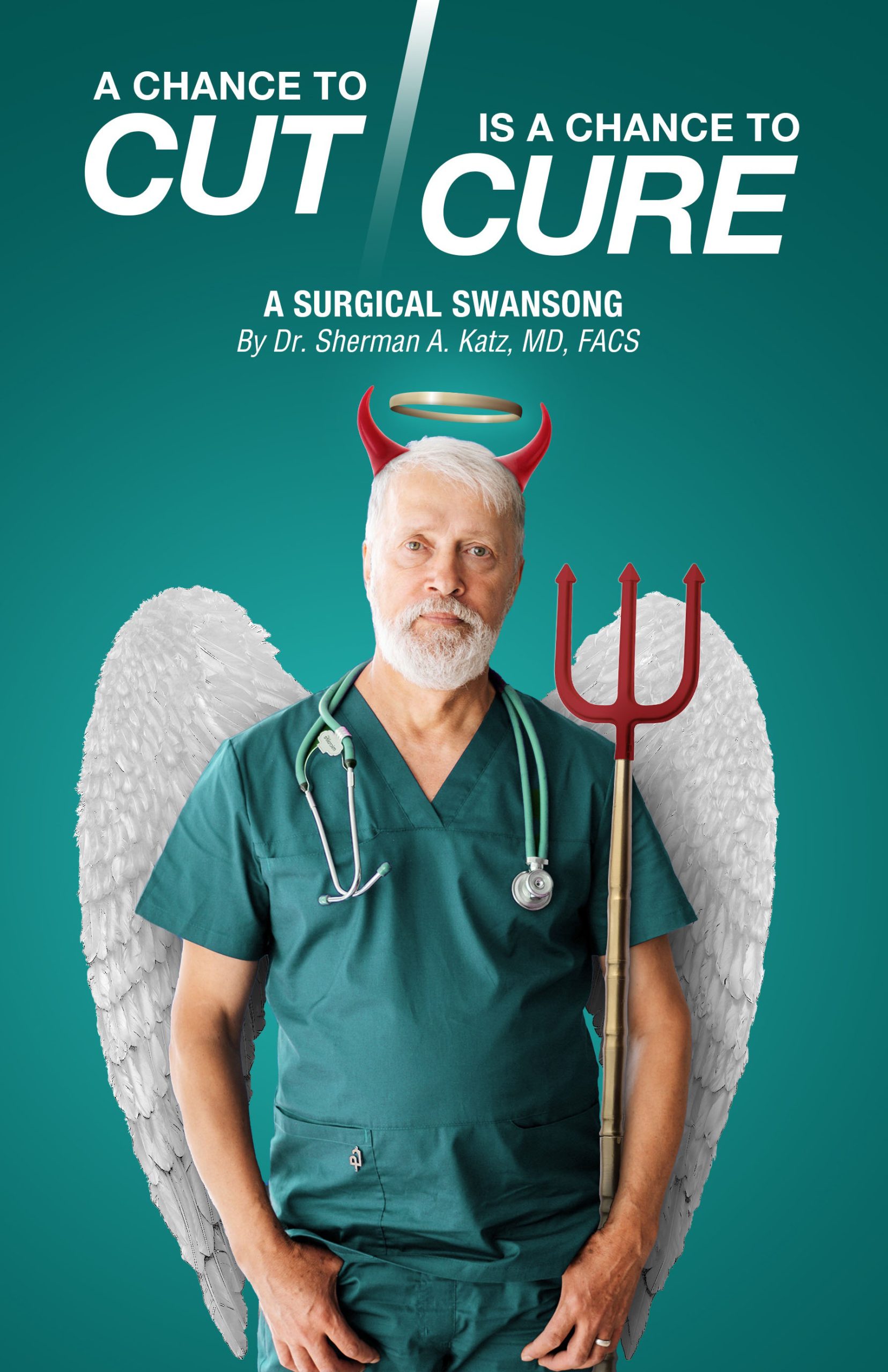
There was a time when a surgeon could build a life — and a legacy — from a single private practice. A time when being “on call” meant being responsible for your patients, not your employer’s metrics. Dr. Sherman A. Katz remembers that time vividly. In A Chance to Cut Is a Chance to Cure: A Surgical Swan Song, he chronicles the life of a solo surgeon with candor, grit, and increasing concern.
Independent surgical practice was once the gold standard. It offered autonomy, patient continuity, and the kind of deep-rooted community respect few professions could match. Surgeons like Katz carried the weight of every decision, not as part of a corporate team, but as the singular, accountable clinician in the room. That pressure wasn’t easy — but it came with pride, and more importantly, purpose.
But that world is vanishing.
Today, solo surgeons are nearly extinct. Katz saw the change unfold over decades: the rise of insurance bureaucracy, hospital consolidation, risk-averse medicine, and a system that prioritizes throughput over thoughtfulness. In his memoir, he offers an unflinching look at how corporatized healthcare has dismantled the culture he came up in — and why it matters.
When a surgeon becomes a cog in a massive healthcare machine, something essential is lost: the personal connection. “I wasn’t just a technician,” Katz writes. “I was their doctor. They called me. They trusted me. They knew I would show up.” In contrast, today’s patients may never see the same doctor twice, and young physicians often report feeling like replaceable workers, not independent professionals.
The erosion of solo practice has also changed how doctors are trained. Katz’s generation learned by doing — standing elbow-deep in the OR, yes, but also running a business, navigating relationships, and making tough ethical calls alone. Those lessons don’t always come from textbooks. They come from responsibility — real, daily responsibility — that many younger doctors simply never experience under group or corporate structures.
Yet Katz isn’t bitter. He’s reflective. He doesn’t rail against the future, but he does ask that we remember the value of the past. His book is both a love letter to an era and a warning about what we’re losing: physicians who knew their patients, who made decisions based on instinct and experience, and who felt personally invested in every life they touched.
A Surgical Swan Song is more than a memoir — it’s a testimony to the human side of surgery, one often obscured by efficiency models and corporate goals. It’s a call to preserve the spirit of independence, even in a system increasingly built for uniformity.
For those inside the medical field — and those who have been cared for by doctors like Katz — this book is a vital reminder: behind every scalpel once stood a soul, a mind, and a moral compass. And if we lose that too often, the cost will be more than institutional. It will be deeply human.