Being a vascular surgeon is not easy. You frequently find yourself in challenging situations where you are expected to act as many patients’ guardian angel. In A Chance to Cut Is a Chance to Cure: A Surgical Swan Song, Dr. Sherman A. Katz shares the reality of being a vascular surgeon. By sharing his personal and emotionally textured account of a surgeon’s 50-year journey, this book offers not just medical memories but a profound meditation on what it means to heal in a world that’s rapidly losing its humanity.
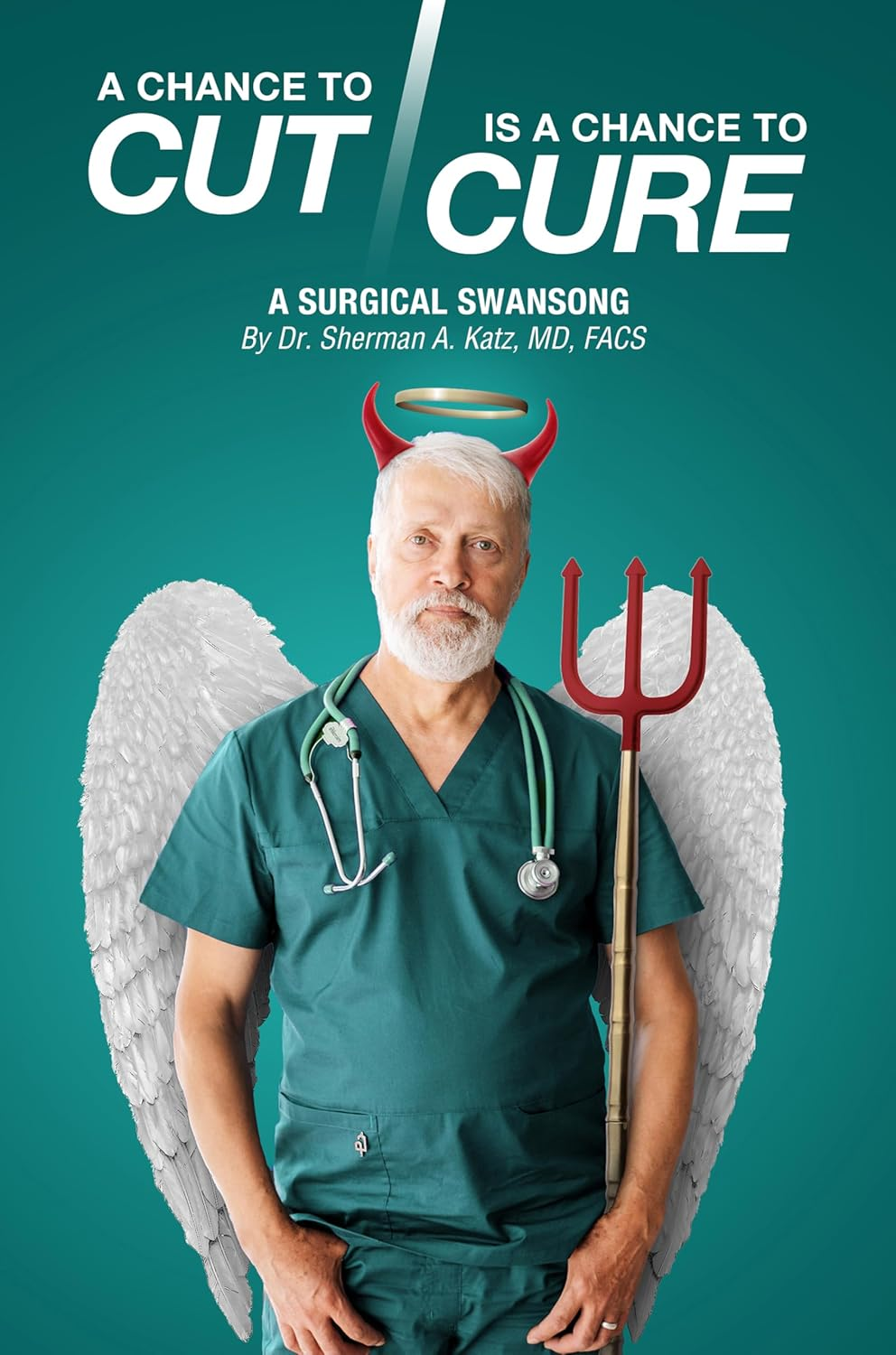
Dr. Katz traces his journey through the highs and lows of surgical life, starting with his early motivators such as TV doctors, toy microscopes, and kid-friendly science projects, and ending with his last days in the operating room. The memoir spans an era marked by explosive technological advancement and equally drastic ethical decline. Katz pulls no punches as he shares stories of glory, regret, resilience, and humor inside and outside the operating room.
What makes this memoir exceptional is the unflinching honesty. Dr. Katz doesn’t paint himself as a hero. He talks about mistakes, doubts, and the emotional toll of a profession where life and death hang in every decision. He shows us the internal conflict surgeons carry and the need to be perfect in a world that is anything but.
One of the book’s strongest aspects is how it contrasts the “old world” of medicine with the newer, corporatized landscape. In this newer world, decisions are dictated by insurance companies, and the word “compassion” has all but disappeared from medical vocabulary. Katz’s voice trembles with frustration, nostalgia, and clarity as he describes how doctors went from being revered figures to controlled workers in a faceless system.
The writing is detailed, reflective, and philosophical. Katz has a knack for telling stories in a way that feels like sitting beside him, sipping coffee, as he recalls decades of change. He is a natural teacher and an honest guide, delivering history, humor, and ethics in equal measure. And while he often laments what’s been lost, he never loses sight of the dignity of the calling.
At times, the memoir reads like a love letter to medicine, his mentors, and the patients he tried to save. At other times, it is a warning about what happens when humanity is pushed aside in favor of profit, speed, and compliance. Katz raises important questions: Have we become too reliant on machines? Are we training doctors to be technicians, not healers? And what is the true cost of better physical outcomes if we lose the soul of care?
Despite its seriousness, the memoir is often funny, self-deprecating, and full of life. Katz brings levity to dark moments and shares the kind of “gallows humor” common among surgeons that helps process the unthinkable. His stories of difficult patients, chaotic training days, and operating room culture are as insightful as they are engaging.
A Chance to Cut Is a Chance to Cure is not just for doctors. It’s for anyone who has ever placed their trust in a medical professional. It’s for those curious about how healthcare used to be and what it could be again. It’s also for students, future surgeons, and anyone who believes in the power of storytelling to preserve truth.
Order your copy on Amazon: https://www.amazon.com/dp/1968615334.